Thanks for elaborating, @Ni7cksurf ,
You are not the first person to ask this question on this forum as a quick search through the posts would reveal. Maybe the time has come for us to accept that 4 Pa of _delta_pressure_ is just too high above what people building Honeybee models are likely to generate with their AFN models. And we should therefore lower the default delta pressure significantly.
Granted, I would still stand by the claim that 4 Pa is a reasonable delta pressure to use with the AFN of a full-building energy model, where you’ll likely have an AFN stack effect that builds over several stories of the building.
But it seems like a lot of people are using the AFN with simple shoe-box models or models of a single apartment, in which case the stack effect is almost non-existent and the typical delta pressure in the AFN is likely to be a lot lower.
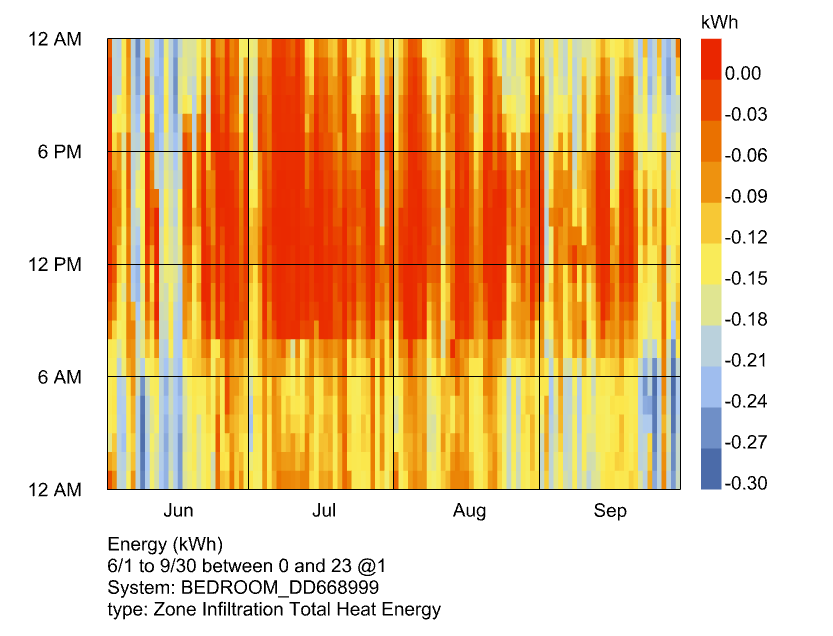
To show what I mean, this is the infiltration energy loss/gain that you get for a shoe box without the AFN and a constant flow rate:
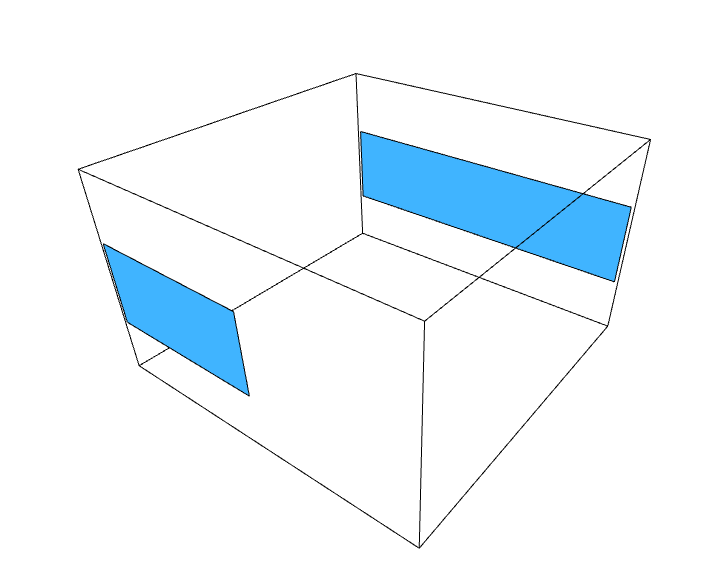
The model is small with only two openings on each side:
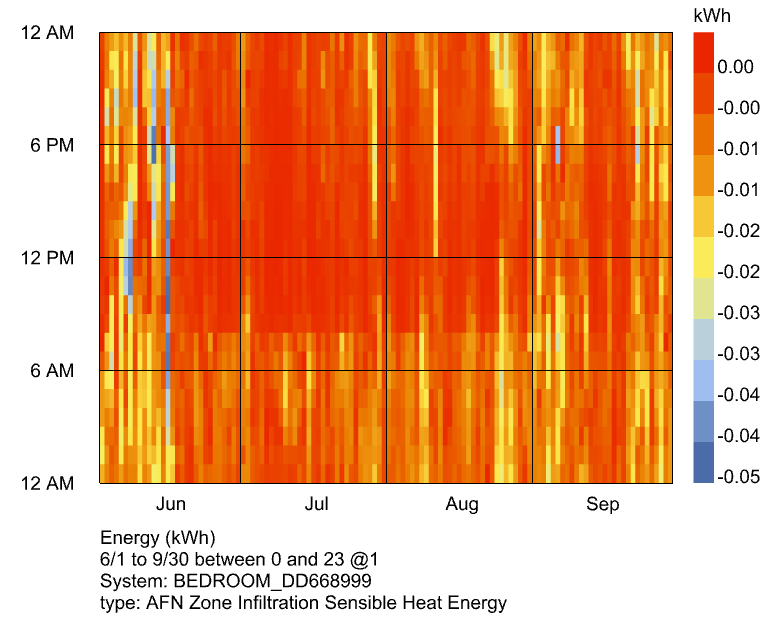
So, with a _delta_pressure_ of 4 Pa, the constant flow rate translates into an AFN crack size that is too small to get a comparable energy loss/gain:
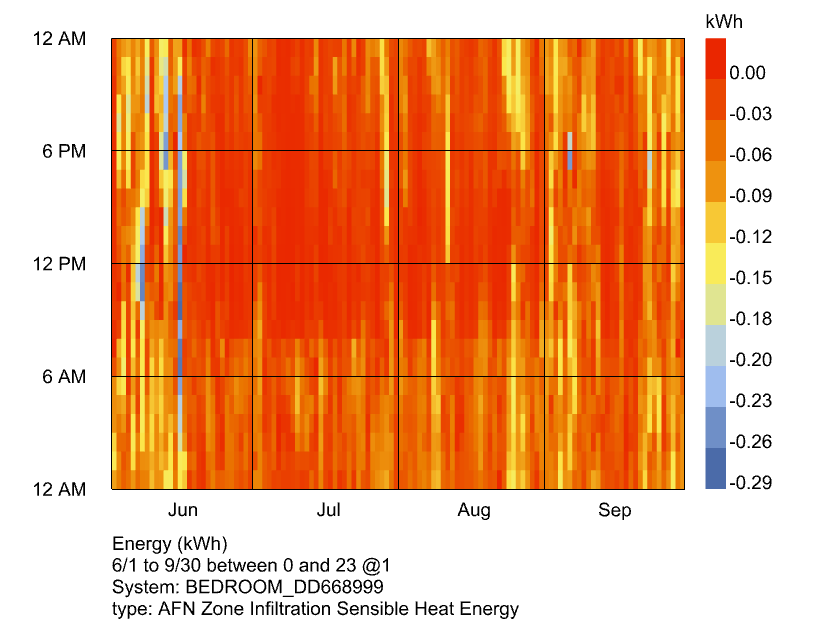
If I lower the delta pressure to something really small like 0.25 Pa, then I start to get something comparable to the constant flow rate:
Here is the file that I am using if you want to see for yourself.
afn_infiltration.gh (88.8 KB)
@Ni7cksurf, Have you tried running a test with a large multi-story model and do you still feel the infiltration is too low for this case? Do you feel having to change the delta pressure so much to get the AFN to behave the way that you want for shoe box models is more of a hindrance than a help?