I’m working with the Honeybee Airflow Network and I have two types of openings:
External windows for natural ventilation → working fine
Internal (inter-zone) opening between two rooms → horizontal
When I set the internal aperture to operable = True, I get this warning from EnergyPlus:
“The following exterior operable apertures are within 10 degrees of being horizontal. These cannot be simulated and have been set to inoperable.”
and a log message in report of AFN "Error: Apreatures must have a true in apreable property in order to assign vent opening energy properties.
My understanding is that horizontal operable openings are not supported by AFN.
However, in my case this opening represents a kind of operable shade/vent between zones, where:
Closed → blocks air and sun
Open → allows both airflow and solar transmission
My question is: Does this mean AFN cannot model inter-zone airflow through horizontal openings at all? If so, what is the recommended approach to represent this kind of operable horizontal opening.
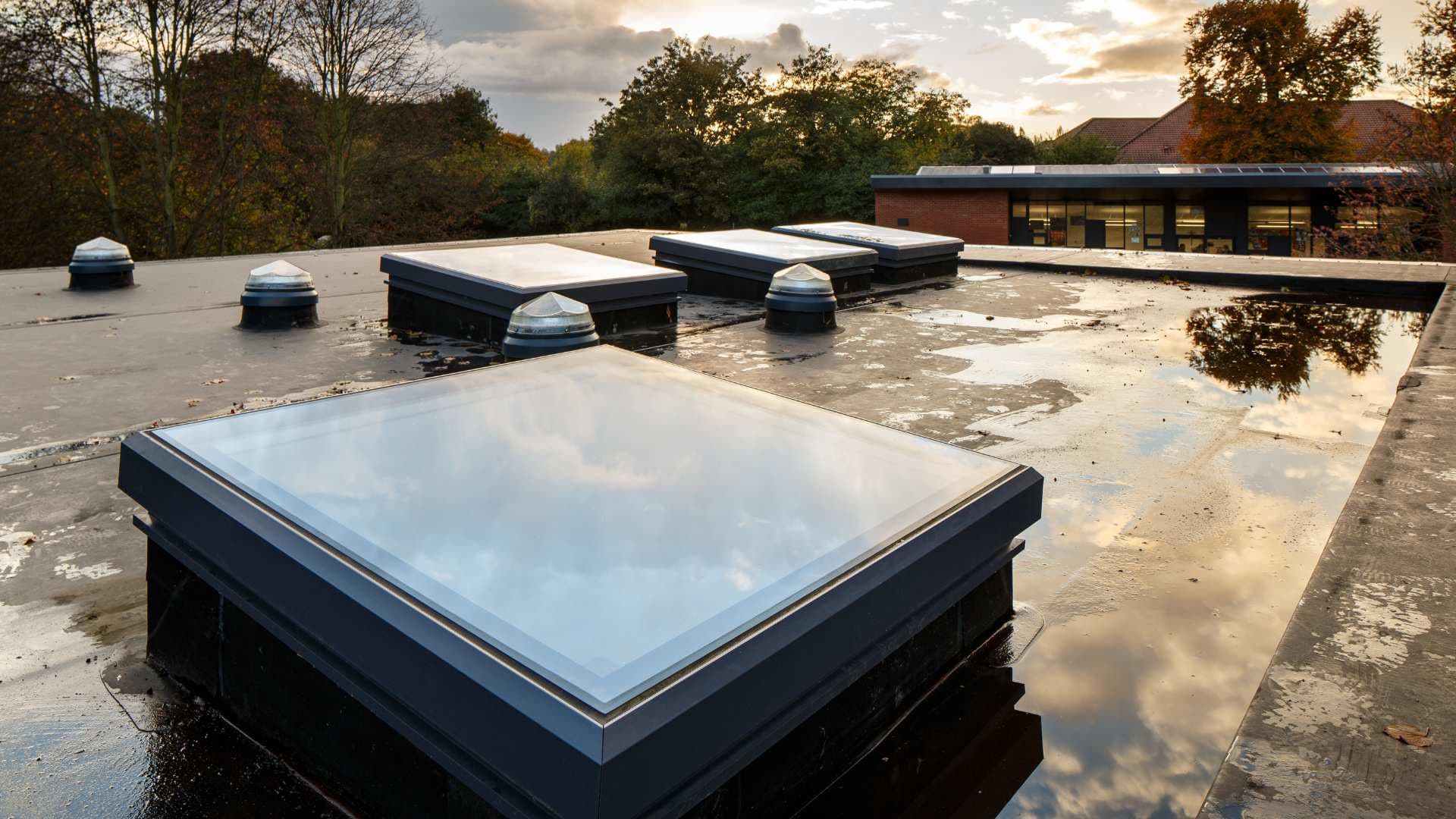
That is correct. The EnergyPlus AFN cannot model perfectly horizontal skylights but, when you think about the real world, perfectly horizontal skylights are generally a bad idea and will likely result in water pooling and then leaking into the building.
Maybe you might consider a design where the skylight pops up and there are vertical ventilation openings around the pop-up.
Or you could at least give a little slope to your skylights for drainage like this:
Thanks for your prompt reply and for clearly explaining the limitation.
Actually, I’m working on a greenhouse model where this “horizontal opening” is actually an internal shading screen placed within the larger structure. The idea is that when it is open, both solar radiation and air should pass through, and when closed, it behaves like an insulating layer with some R-value to reduce heat loss.
I initially considered using an air boundary wall but it allows airflow but not solar transmission, which doesn’t match the physical behavior I’m trying to represent.
Due to the large span widhth introducing sufficient slope is quite difficult for my design (even 10° creates large height differences).
I would appreciate any suggestions on how to best approximate this behavior using any other tool within grasshopper?
 Does this mean AFN cannot model inter-zone airflow through horizontal openings at all?