Hi all,
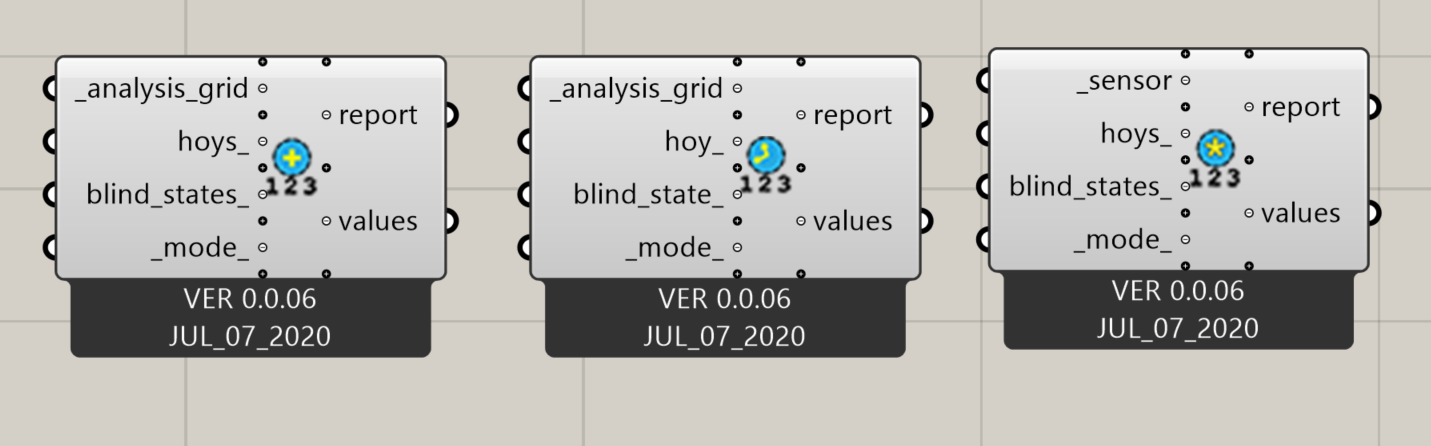
Is it possible to derive hourly lux values from grid or sensors in Honeybee radiance as we could do in [+] version of honeybee.
cc @chris
Hi all,
Is it possible to derive hourly lux values from grid or sensors in Honeybee radiance as we could do in [+] version of honeybee.
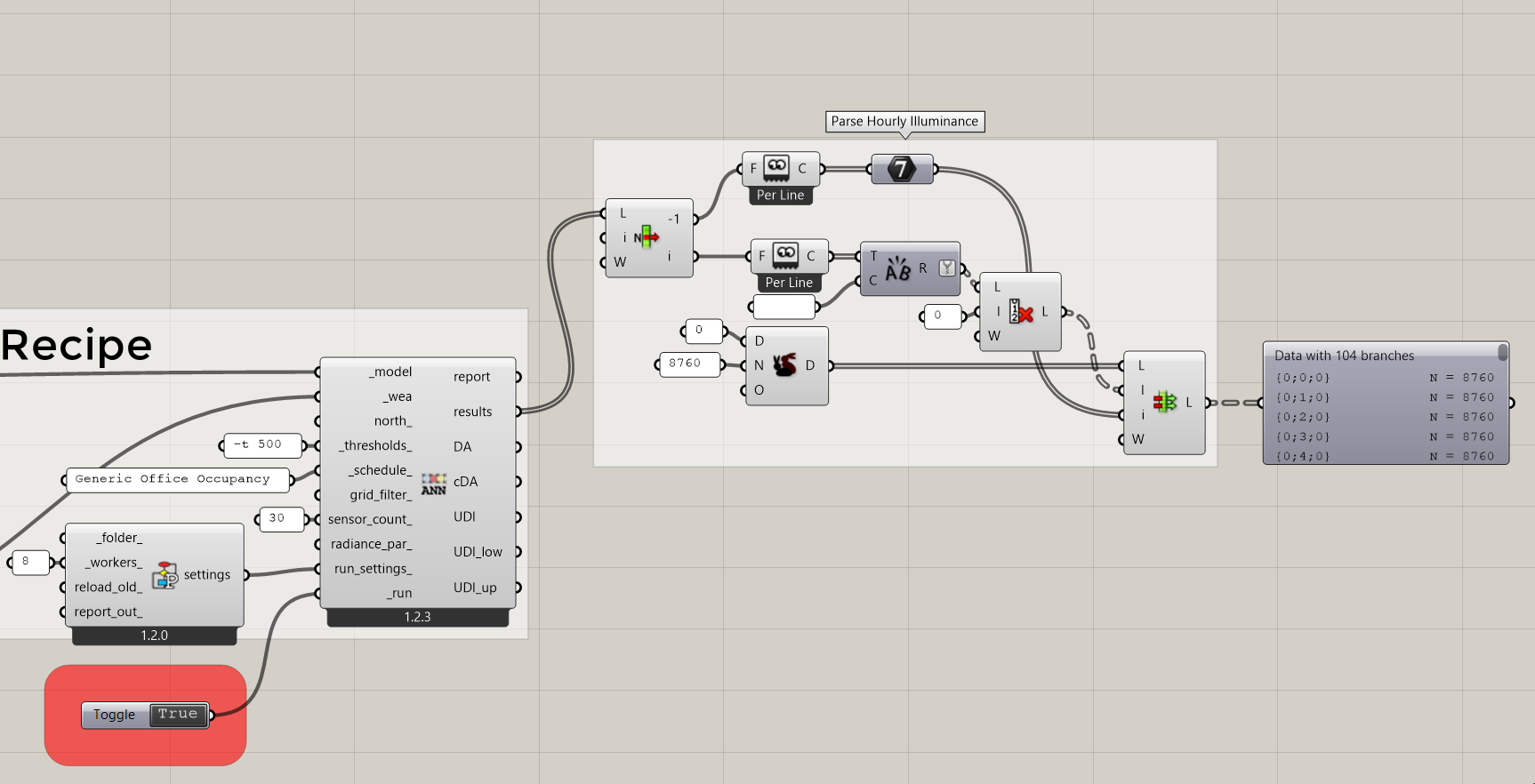
Yes, the hourly illuminance values are contained in the .ill files that you see output from the component. We haven’t added dedicated components for parsing these files yet so you’ll have to use a few native GH components to do it like so:
Thank you for the script @chris. But still love too see the plus version parsing components in LBT version. 
We’ll get there. The main reason why we haven’t done it yet is that these matrices of illuminance values can be huge and so we want to switch to using faster/compressed binary formats for them. This will make post-processing operations on them a lot faster. Once we make the switch to binary formats, adding the components will be quick.
Thanks for this update @chris. Will keep an eye on this update.
@chris Has there been any movement on this? Even a component that averages sensors on a grid on an hourly basis would be fantastic for BREEAM compliance
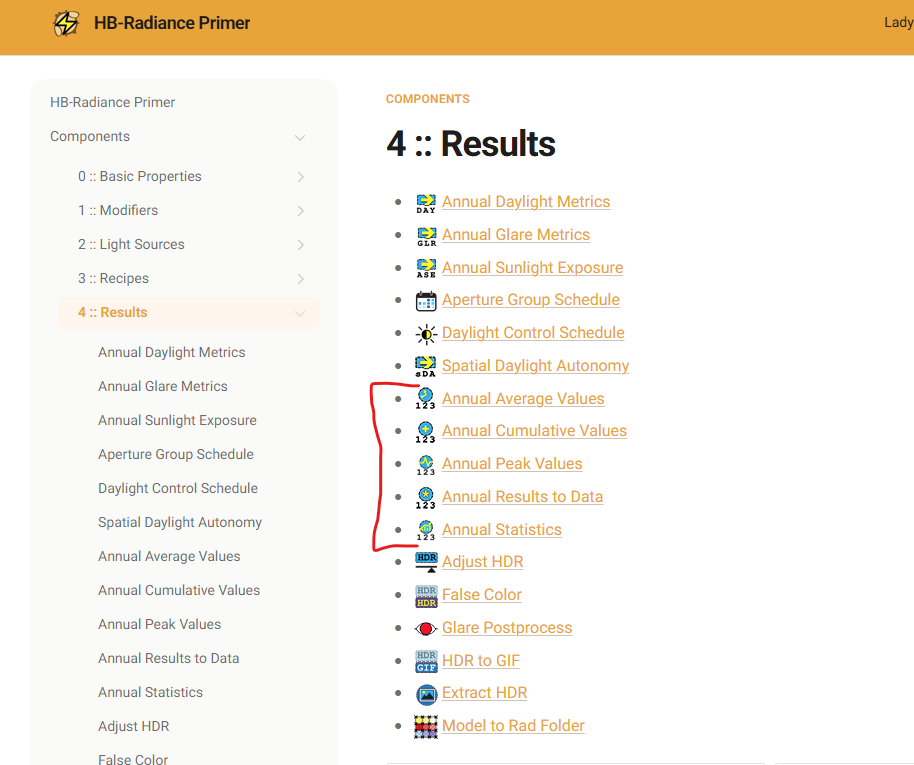
We added components to parse hourly illuminance values a long time ago, you can see them all under this sub-section of the 4:: Results tab:
@mikkel also did a lot of good work to format these matrices into numpy formats, which perform much better given the large size of these matrices for some projeccts.
Thanks, i am struggling to use annual results to data to perform the post processing for BREEAM compliance. The component is taking a very long time to run with results from a seven level building. is there a way to make this process faster or bring in only a grid at a time?
Hi @Nicholaskerr,
You can use the HB Annual Statistics component to calculate the average illuminance on an hourly basis if you set per_timestep_ to True. You will get a Ladybug DataCollection of the average (and median, minimum, maximum, cumulative) for each grid, that you can deconstruct with LB Deconstruct Data, and then use the native “Larger Than” component to count the number of hours where the average illuminance is larger than the threshold.
For the minimum illuminance / worst lit point, as mentioned here, you cannot use the minimum output since it will return the minimum illuminance for each hour, i.e., not the worst lit point as mentioned in the link.
However, we will (very) soon announce a BREEAM recipe that will do all the post-processing.