Hi Chris! Many thanks for all the work that has gone into DHC systems simulation. The current implementation is already very useful and represents a significant step forward.
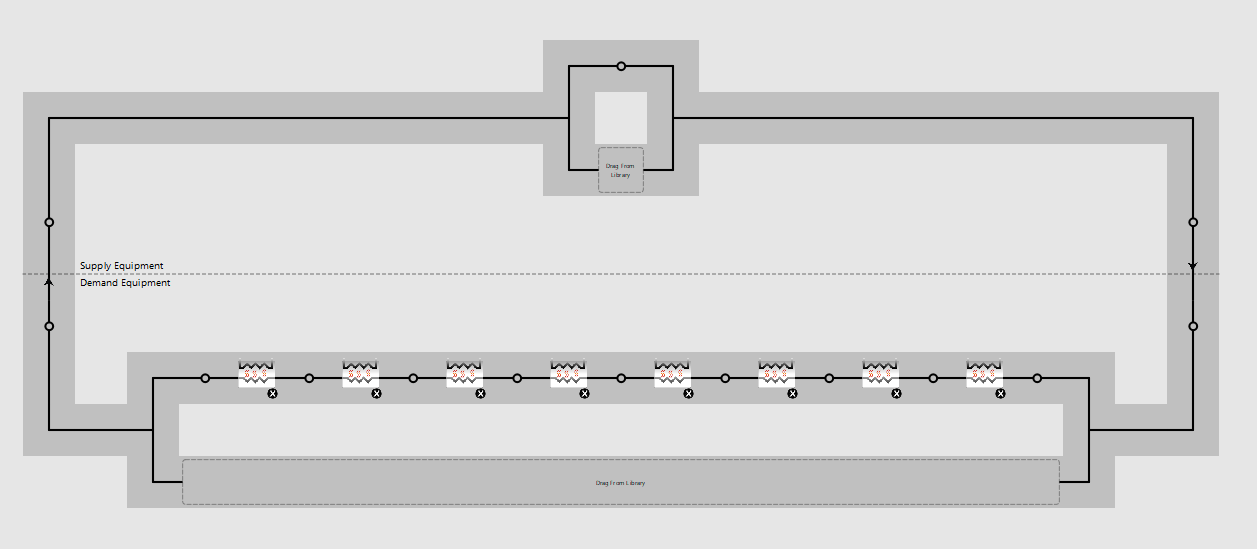
As a possible future improvement, it would be great to support both one-pipe and two-pipe 5GDHC configurations in OpenStudio PlantLoop through series and parallel connections of heat pumps. From my understanding, the current approach seems to behave as a two-pipe 5GDHC system (each heat pump working at the same main loop temperature), so extending the modelling capabilities to explicitly represent both configurations would be very valuable for studying low-temperature, bidirectional networks.
This is a very common design question when comparing scalability, implementation costs, and energy performance in the feasibility studies for 5GDHC projects we are working on.
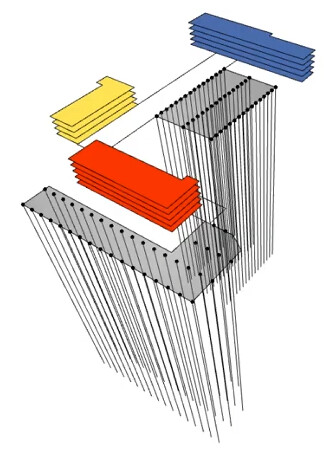
Additionally, I believe this would also enable the connection of multiple GHEs in the main loop while preserving their exact order in a one-pipe configuration.
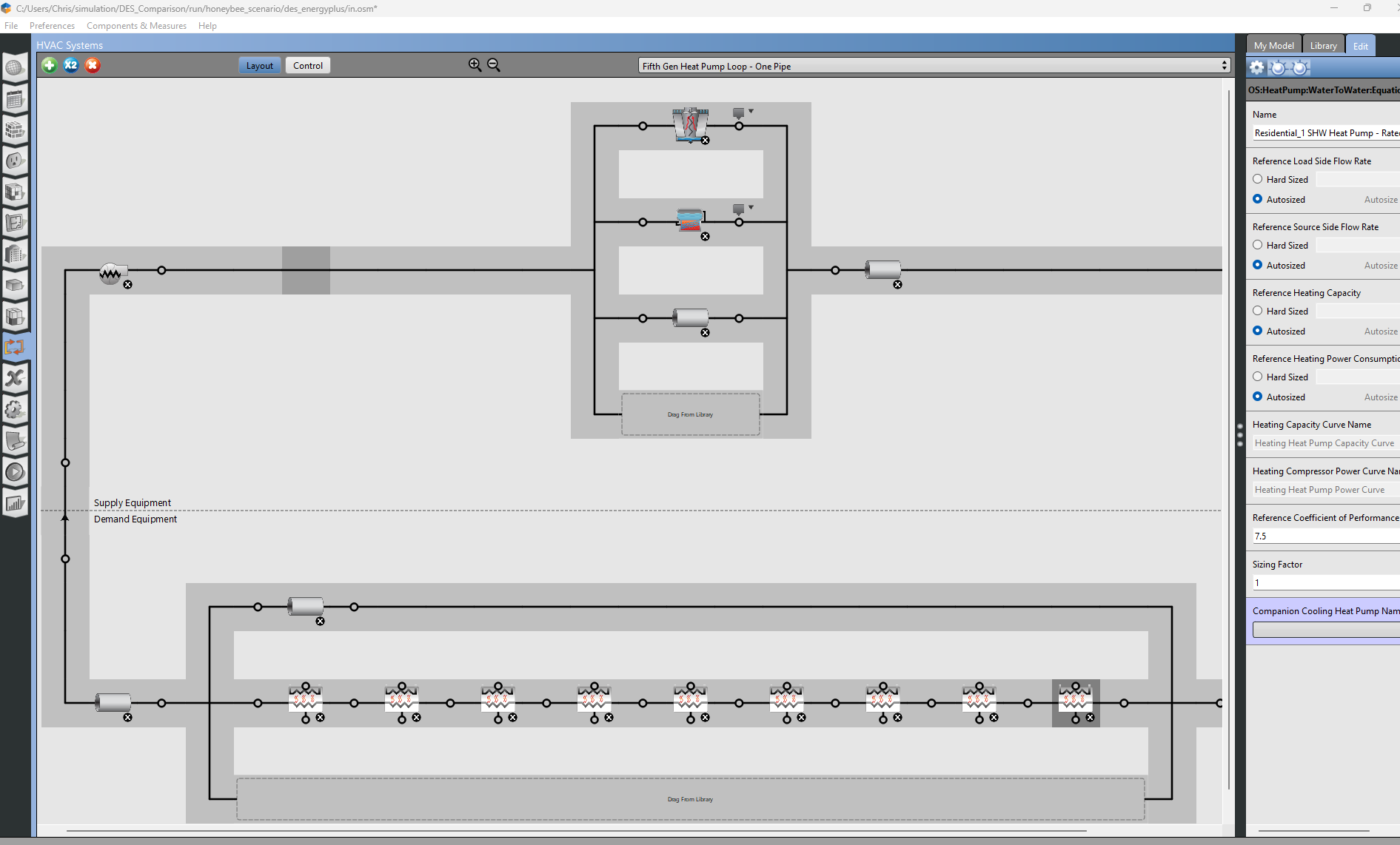
I understand the request but EnergyPlus has some limitations in it’s ability to represent the one pipe scenario that you are suggesting with your first screenshot. You can connect the heat pumps in series like you have there and EnergyPlus usually can still simulate in these cases but you often get results that are not exactly what you expect, especially as you add more and more buildings into the loop and the control sequences get harder for E+ to resolve. Furthermore, as the OpenStudio App screenshots illustrate, EnergyPlus always separates the demand side of the loop from the supply side. All ground heat exchangers and supplemental equipment must always be on the supply side to participate in the simulation and all building heat pumps must be on the demand side. This means E+ cannot represent cases where you have GHEs staggered in between buildings along a one-pipe ambient loop. Still, I’ll concede that the the arrangement in your first screenshot can simulate ok for small districts that I tested and so maybe I can add it as an experimental feature at some point.
But the official answer for how to understand the complexities of the one-pipe arrangement is to use the WIP Modelica models mentioned at the end of the post. I know that these models currently require a lot of expertise with Modelica and they are not currently able to run out of the box for the vas majority of cases. But they are designed to answer all of the engineering questions that come up when designing one-pipe systems, including the impact of GHEs staggered between buildings along a one-pipe ambient loop. So this is what I would recommend if the studies have gotten to the point where you need to know whether the one pipe arrangement will work and investigate temperatures and pressure drops all along the course of that one pipe.
I am just letting you know that I tested your idea for modeling one-pipe systems in OpenStudio/EnergyPlus more an I can confirm that, while I was able to get a district with one building to simulate correctly, once I moved to 3 buildings all on the same pipe, EnergyPlus failed with a Fatal Error:
** Severe  ** Plant temperatures are getting far too hot, check controls and relative loads and capacities
**  Fatal  ** CheckForRunawayPlantTemps: Simulation terminated because of run away plant temperatures, too hot
Here is the OSM from my tests if you want to see for yourself:
It seems like EnergyPlus just really is not built to run the one-pipe scenario well so I’m going to keep the current two-pipe setup for the time being. If you end up finding a set of EnergyPlus controls that get a one-pipe scenario like this to work well, let me know and I’ll see if I can implement them in dragonfly.
Until then, the Modelica model remains the official response for how to model a one-pipe setup.