Kia ora @SaeranVasanthakumar
I have attached the latest version of the script (geometry internalised - note that the geometry is on separate layers in the Rhino geometry file).
Test_annual_loads_distribute.gh (464.9 KB)
Just by way of explanation:
- the bottom half of the script (in image below) is basically a library of New Zealand materials (e.g. Simple “Window” definitions are based on NZ Standard Window and calculated within LBNL Window Program)
- the top half of the script has a single model build linked to four possible analyses.
I have circled the key model inputs for this issue as I see them.
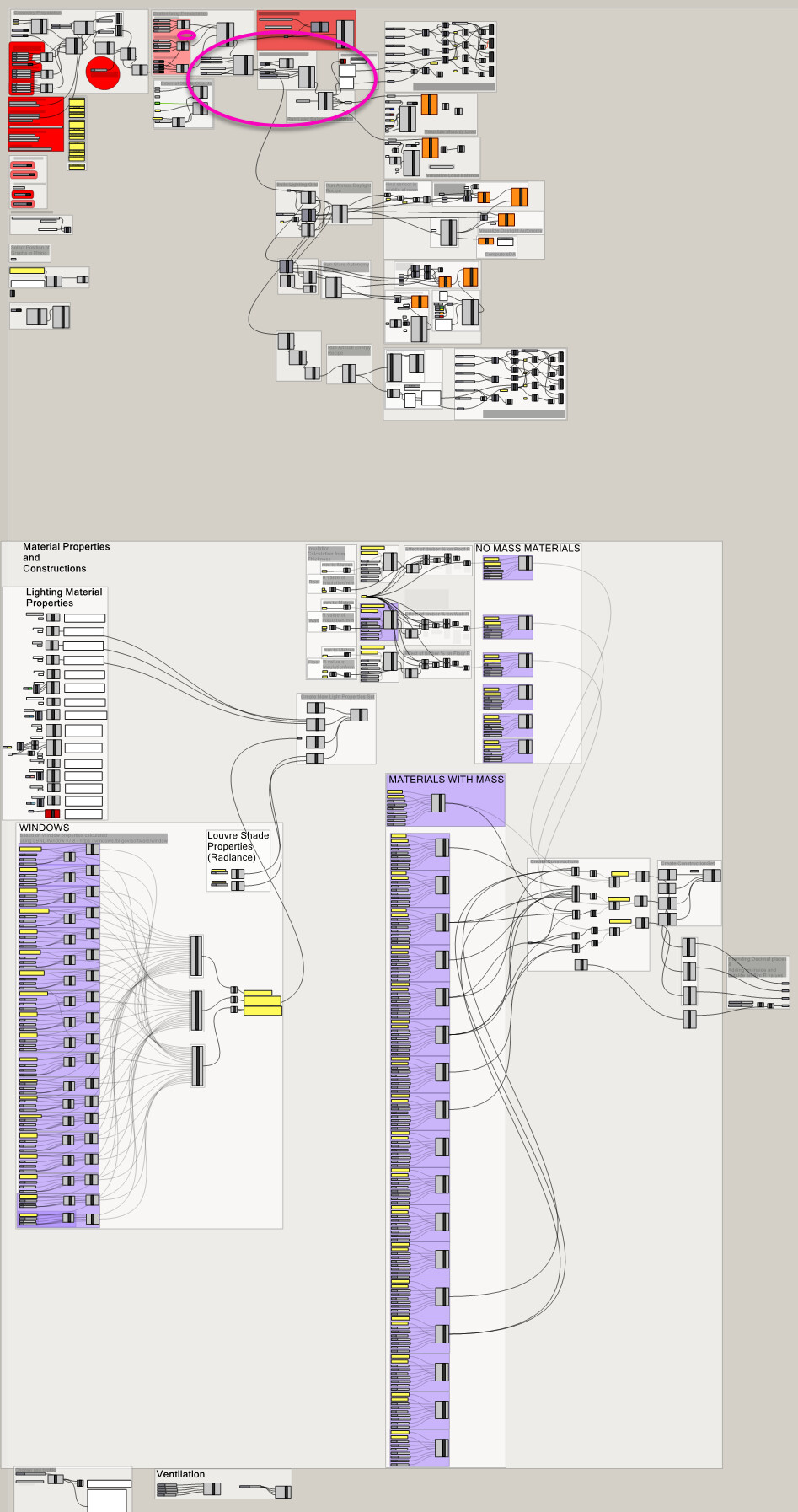
What I am trying to achieve is providing students with a Shipping container as a coffee cart in an urban context where they can work on 1) placement of the container in the urban park, 2) window size, 3) orientation, 4) external insulation thickness, 5) shading options, in response to the messages about where the energy flows are happening from the excellent Load Balance data. Following that they can optimise the daylight indoors. I am thinking of making 4 separate analysis files to simplify the appearance of the script, but in development mode I have all four analyses in the one file.

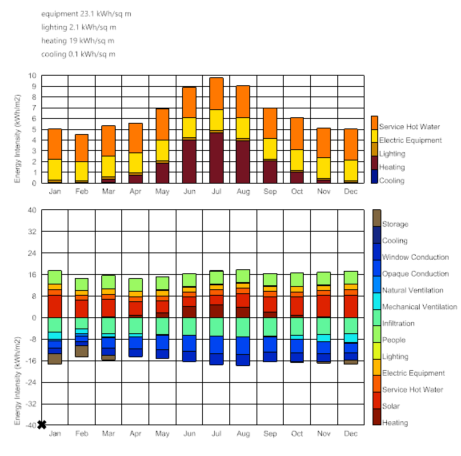
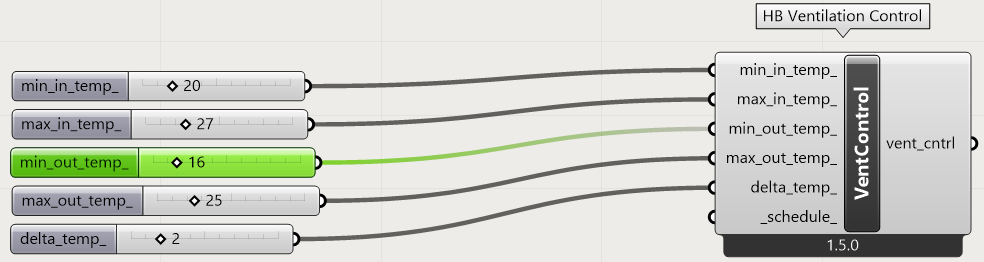
For one of the warmest climates in New Zealand (Kaitaia), I have tried a bunch of ventilation settings in regards to the heating and cooling operation mostly as a desire just to figure out what is the “mechanical ventilation” term. However, what I was finding with the vent_ctrl was ‘behaviour’ that did not seem reflective of real buildings. With a Heating Setpoint of 18C and a Cooling set point of 27C, I had expected that the following would represent what people might see as a reasonable set of ventilation controls:
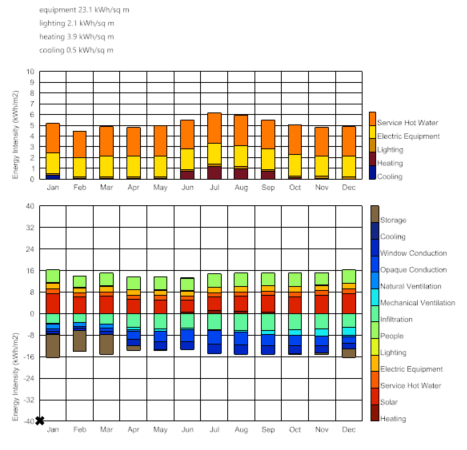
But this produces some very large “Error” terms (and in answer to @chris - in future terming this monthly input/output difference, would usefully be labelled something like “Delta”, so long as it is associated with the usual excellent LBT explanation. I say this because I suspect that to label it an ‘error’ term, or even margin of error, would be as misinterpreted in the same way storage is interpreted by my students).
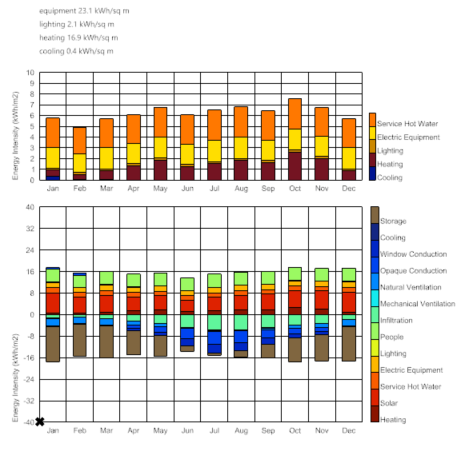
Changing the set point for the minimum outdoor temperature when the windows are opened
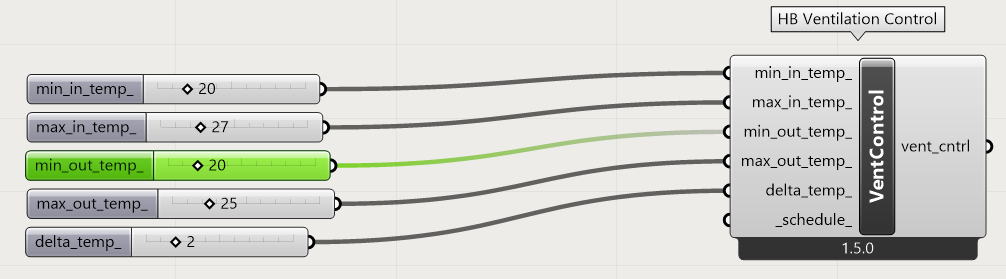
Gets rid of some of the error term (notably in Spring, not summer):
Changing the indoor temperature when the windows are opened to be 2C more than the outdoor temperature when the windows are opened (to be consistent with the 2C Delta between indoor temperature and outdoor temperature for cooling )
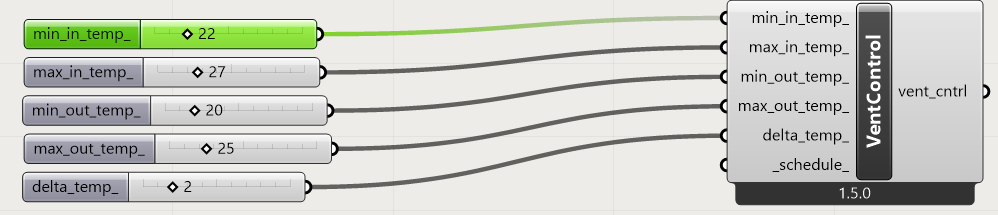
makes little difference to the error term
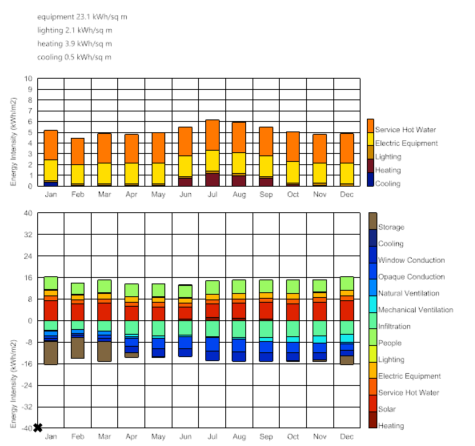
Changing the number of timesteps for the energy balance does not seem to make a big difference.
Moving this last option to Wellington, a climate that rarely gets too hot or cold, reduces the error term: