I am trying to run the LB thermal comfort workflow with real-world weather that I am downloading from open-meteo api ( 🏛️ Historical Weather API | Open-Meteo.com ) to run the workflow with real world weather rather than the EPW weather.
For the workflow I need the following inputs from an EPW that I am substituting with the real-data, and I have done this with no issue:
air temp, RH, wind speed, wind direction
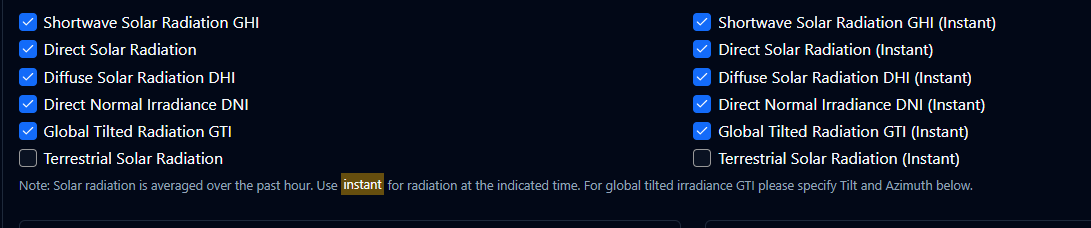
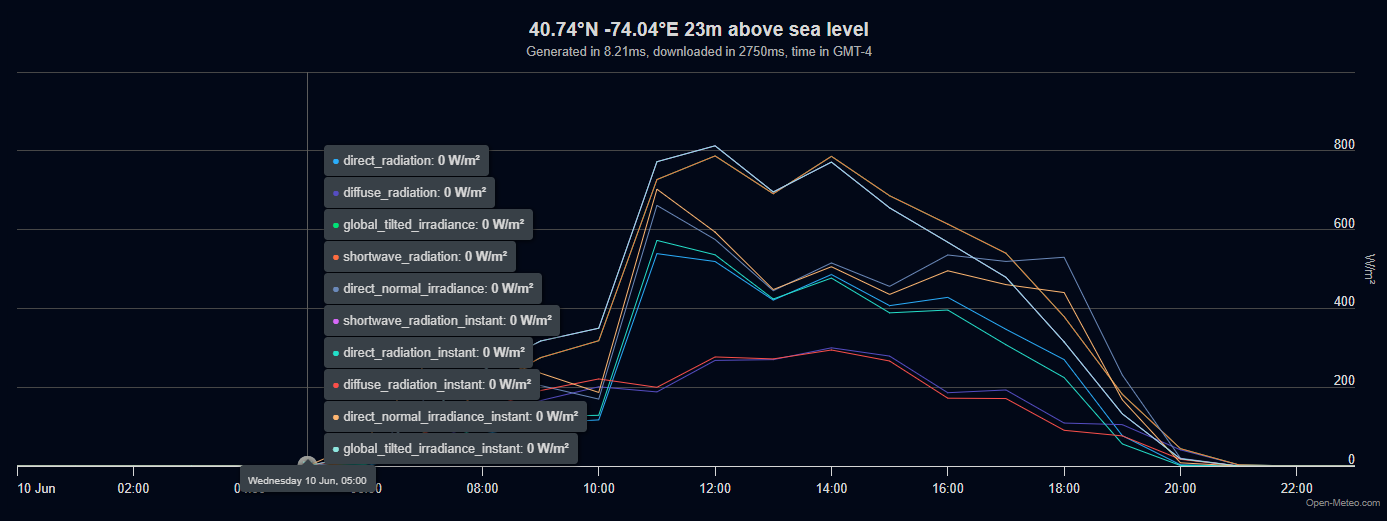
My problem is when it comes to radiation, these are the rad variables I can get from openmeteo:
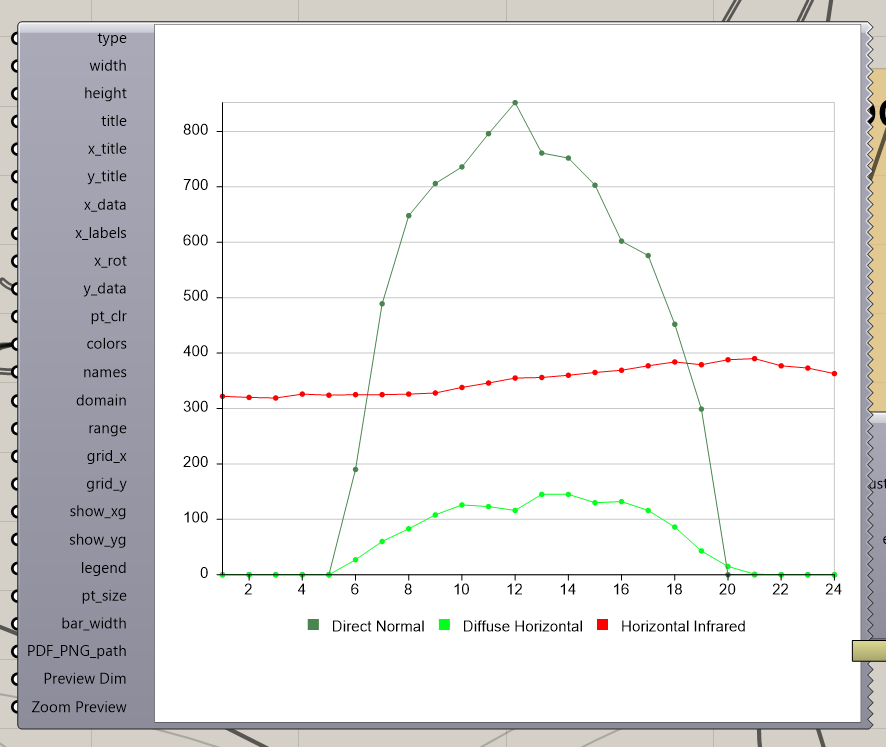
Diffuse and Direct are straightforward, but this does not include Horizontal Infrared Radiation. If you plot the two you can see there is nothing that appears to be this:
My work-around has been to just find a day in the EPW around the same time frame, and approx same weather, and use the radiation from the EPW and then the open-meteo data for the other variables. However I would like to stop doing that if possible.
Does anybody have a solution or a source to get this horiz_infrared data?
hey, try using DF Horizontal Infrared component that uses Cloud cover and DB and WB temperatures as inputs to calculate the Horizontal Infrared radiation.
In case it’s helpful, a couple of additional thoughts:
Open-Meteo’s Historical Weather API currently exposes shortwave, direct and diffuse solar radiation, but not downward longwave radiation in its documented hourly variable list.
Another alternative is Oikolab/ERA5’s surface_thermal_radiation, which is the downward atmospheric and cloud longwave radiation reaching a horizontal surface. This corresponds to EPW N12 Horizontal Infrared Radiation Intensity. Don’t use surface_net_thermal_radiation, since that includes the upward ground-emitted component. For hourly Oikolab values in W/m², the numerical value can be used as the EPW hourly Wh/m² value, provided the timestamps and hour-ending convention are aligned. Oikolab can also generate an ERA5 actual-year EPW directly.
p.s. This was top of mind because I’ve just developed a new N12 morphing procedure in my tool FutureWeather.co (using rlds from the climate model data).