Hello,
I am using Honeybee 1.10 in Grasshopper to analyze the annual heating and cooling loads of a simple office model.
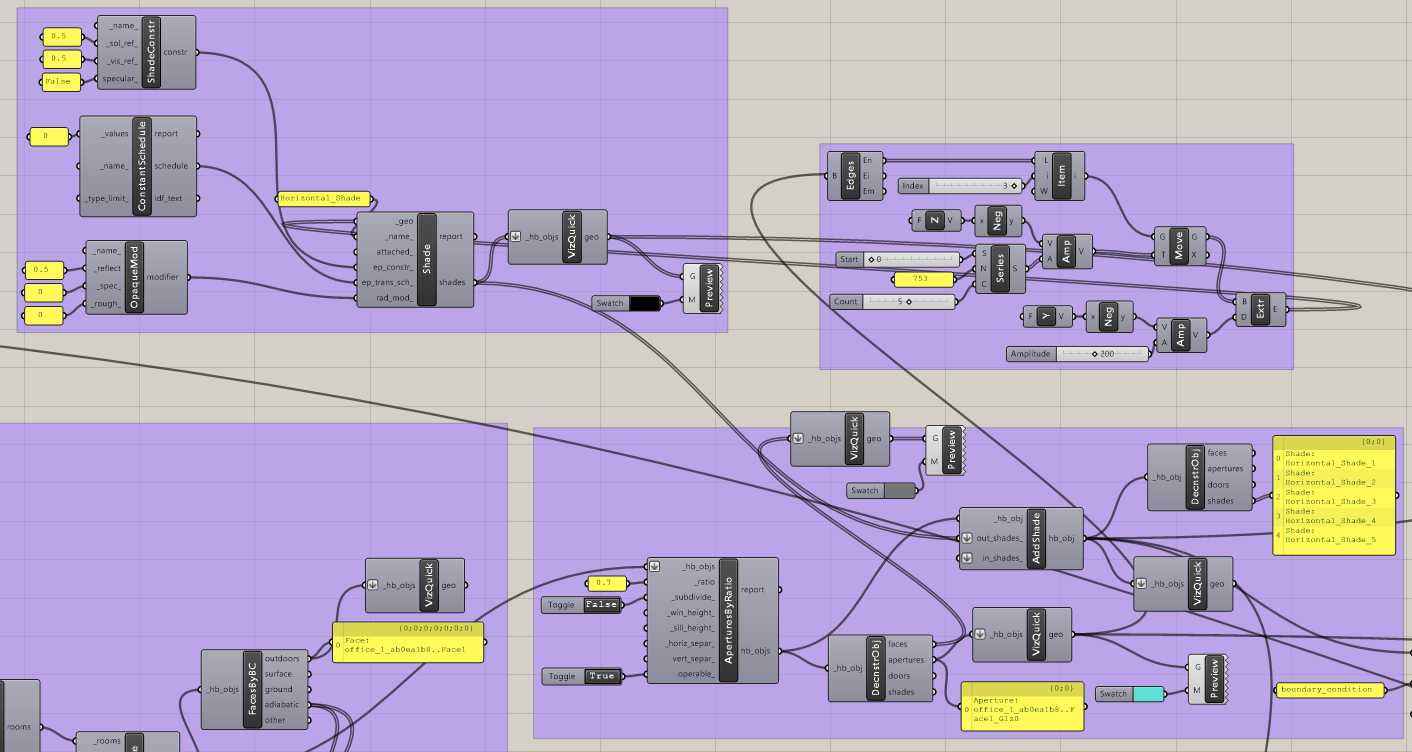
My study evaluates how horizontal external shading devices installed on a south-facing curtain wall affect annual heating and cooling loads. I am comparing several cases with different shading depths.
Model description
- One office room
- Room dimensions: 9 m × 12 m × 4.5 m
- Floor area: 108 m²
- South-facing curtain wall
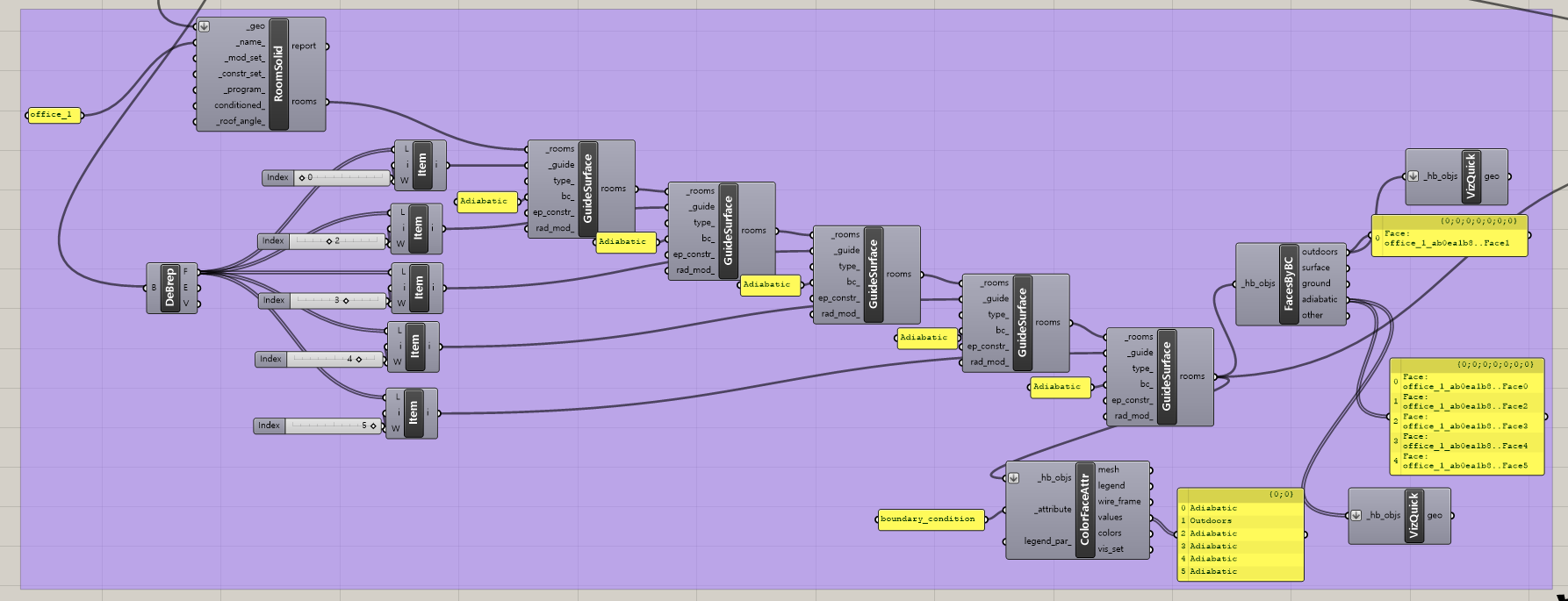
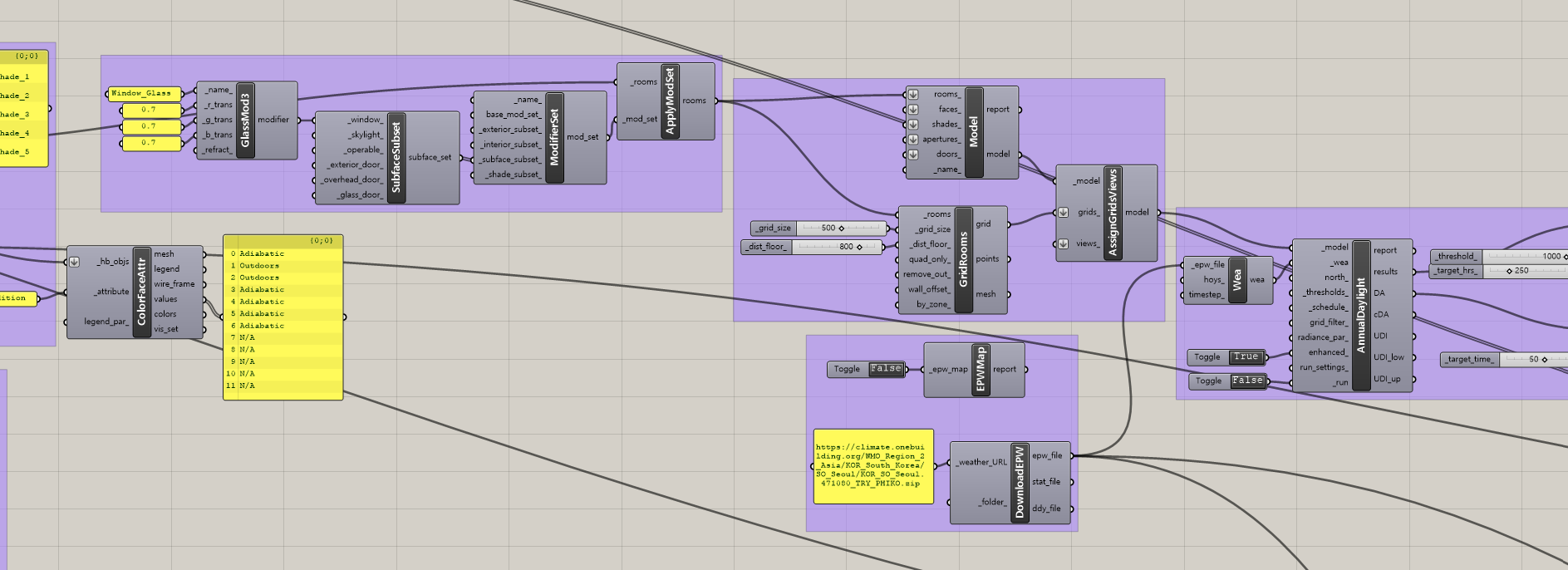
- The south wall is set to Outdoors
- The north, east, and west walls, roof, and floor are set to Adiabatic
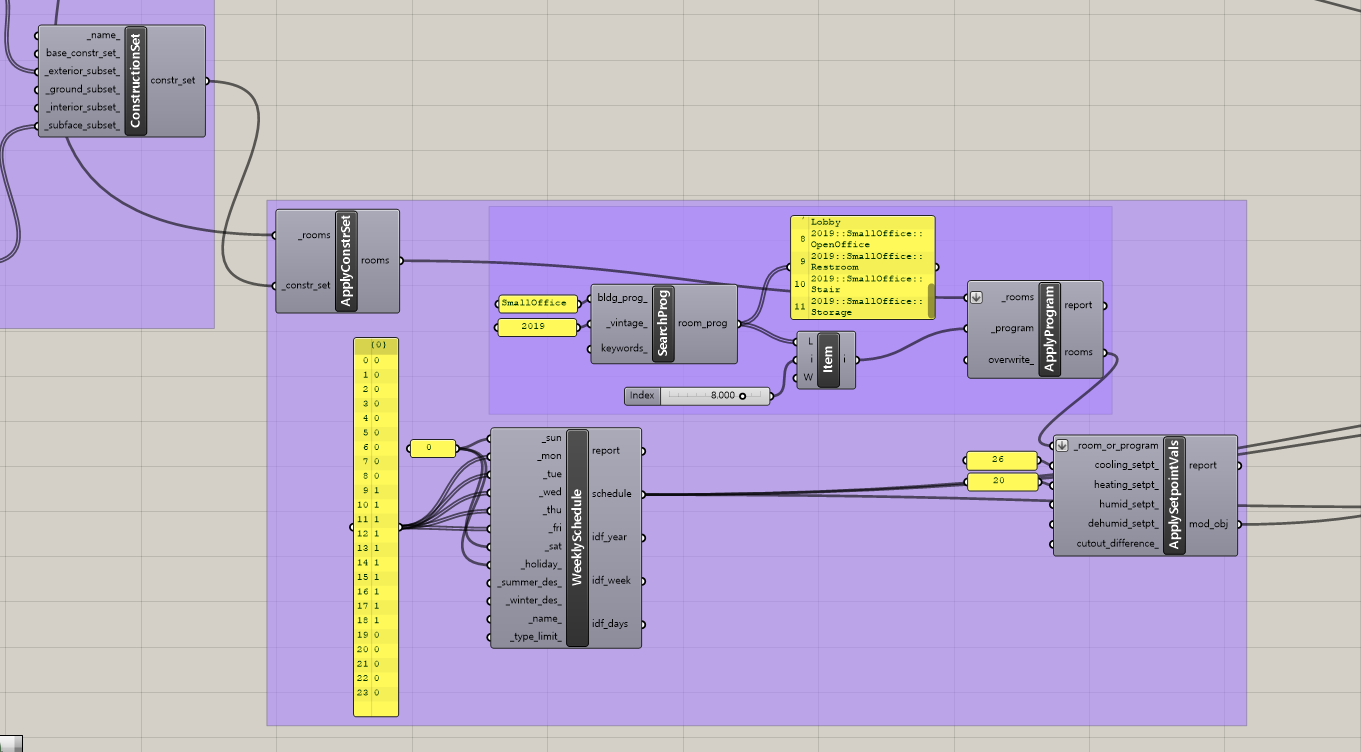
- Program type: 2019::SmallOffice::OpenOffice
- Ideal Air HVAC
- Cooling setpoint: 26°C
- Heating setpoint: 20°C
- People: 0.06 person/m²
- Lighting load: 10.55 W/m²
- Electric equipment load: 10.33 W/m²
- Ventilation per floor area: 0.00030 m³/s·m²
- Ventilation per person: 0.00236 m³/s·person
- Infiltration: default schedule and values from the SmallOffice program
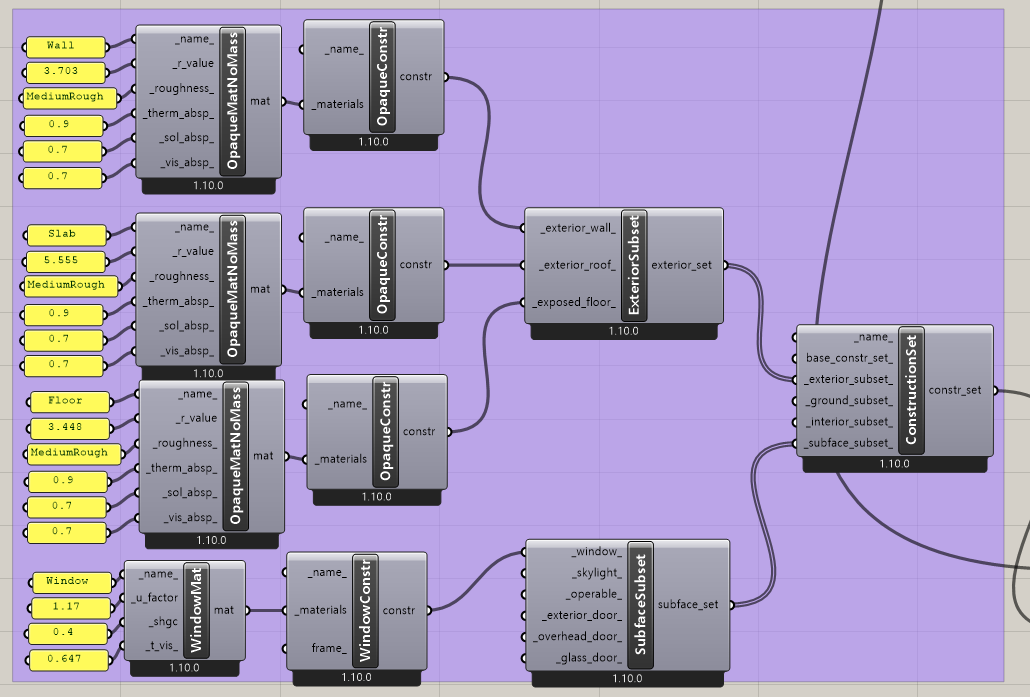
- Window U-value: 1.17 W/m²·K
- Window SHGC: 0.4
- Visible transmittance: 0.647
- Horizontal shading depths: 0–500 mm
- Weather file: [EPW location]
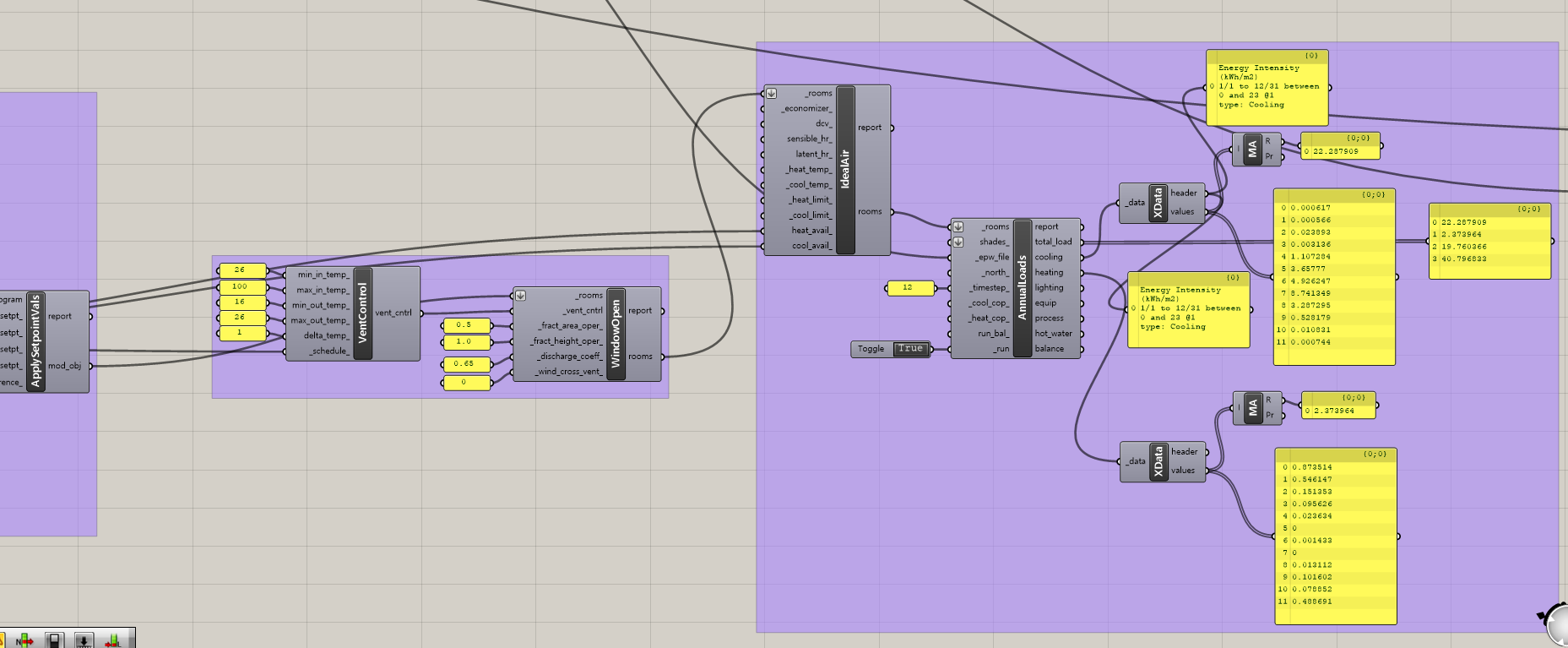
I am using the HB Annual Loads component with a timestep of 12.
Simulation results
For the case with a 100 mm horizontal shading device, I obtained approximately:
- Annual cooling load: 29 kWh/m²·year
- Annual heating load: 2 kWh/m²·year
- Total annual heating and cooling load: approximately 31 kWh/m²·year
The general trend appears reasonable. As the shading depth increases, the cooling load decreases while the heating load increases.
However, I am comparing my results with a previous study that analyzed a similar office model. The previous study reports annual heating and cooling load values of approximately 1.6–1.8, with the unit reported as kWh/m²·year.
This is significantly lower than my result of approximately 31 kWh/m²·year. Because the difference is very large, I would like to confirm whether there is an issue with my Grasshopper workflow, simulation settings, or interpretation of the HB Annual Loads output.
Questions
- Is an annual heating and cooling load of approximately 31 kWh/m²·year reasonable for this type of office model?
- Is the output from HB Annual Loads already normalized by the total room floor area?
- Could there be any duplicated rooms, loads, schedules, ventilation settings, or shades in my Grasshopper workflow?
- Is it appropriate to use HB Annual Loads to compare the effects of different external shading depths?
- Is there anything in my attached Grasshopper file that could explain why my cooling load is much higher than the value reported in the previous study?
- If my workflow appears to be correct, could the discrepancy instead be related to the calculation method, normalization process, or unit reporting in the previous study?
I have attached my Grasshopper file along with screenshots of the workflow and simulation results.
I have been trying to identify the cause of this discrepancy for quite some time but have not been able to find it. I would be truly grateful if someone could take a look at my Grasshopper file and let me know if there are any mistakes in my workflow or simulation settings. Any advice or suggestions would mean a lot to me.
Thank you very much for your time and help.